
Bathroom Throughput Solutions
For operations leaders, venue managers, and facility managers, restrooms are more than a basic amenity. They are a critical part of the guest journey that can make or break event satisfaction, revenue potential, and even safety. This guide explains how to boost “bathroom throughput” in high-traffic environments while maintaining excellent hygiene and saving water.
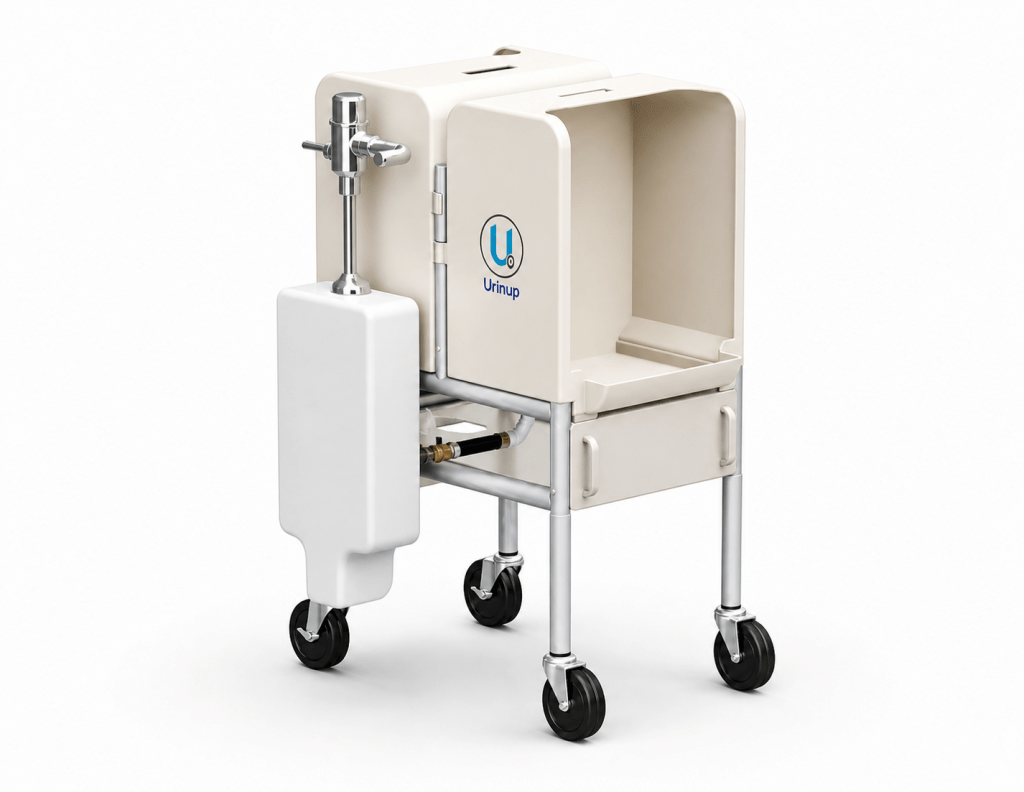
CapaciFlow™ provides portable, hygienic, water-saving sanitation units, available in three dual-mode editions that can operate either connected to existing infrastructure or in fully portable, off-grid mode. Built for demanding locations like stadiums, hotels, convention centers, and senior living communities, these units are deployed into your existing guest spaces to increase bathroom throughput and reduce queues without permanent construction. The insights below will help you evaluate your current restrooms and plan smart upgrades across both your fixed facilities and portable capacity.
What is bathroom throughput?
Bathroom throughput is the number of people who can use a restroom in a given period of time, such as per minute or per hour. In practice, it answers questions like:
- How many guests can your restrooms handle between halftime and the start of the next quarter?
- Can your lobby restrooms cope with a conference break where 400 people leave sessions at once?
- Are morning peak times in your senior living facility creating delays or safety risks for residents?
Throughput depends on multiple factors: the number and type of fixtures, how fast each fixture can be used, the layout and traffic flow, and how often restrooms are out of service for cleaning or maintenance.
A simple way to estimate throughput
You do not need complex models to get a quick estimate. Start with this basic calculation for each restroom bank:
Estimated users per hour = (Number of fixtures) × (Average users per fixture per hour)
For example, if a men’s restroom has 6 urinals and each can serve about 20 users per hour during busy times, that restroom can serve roughly 120 users per hour. If your halftime crowd pushes 300 people toward that restroom in 15 minutes, you can immediately see there will be a bottleneck.
Why bathroom throughput matters for your organization
Guest satisfaction and brand perception
Long restroom lines are one of the most common complaints in stadiums and event venues. When guests spend 20 minutes of a 30-minute break waiting to use the restroom, they associate that frustration with your brand. Hotels and senior living facilities are equally vulnerable: slow or crowded restrooms quickly translate into lower satisfaction scores and negative reviews.
Revenue and dwell time
Restroom capacity directly affects how guests use their time on site. In stadiums and arenas, every minute waiting in line is a minute not spent at concessions or merchandise stands. In convention centers, clogged restrooms during breaks can delay session start times, reducing the value of paid programming. Improving throughput frees up guest time and can increase per-guest spending.
Health, hygiene, and safety
Congested restrooms create crowding in corridors and lobbies, which can become a safety risk during peak surges or evacuations. In senior living and healthcare environments, residents who cannot access a restroom quickly may face serious health and dignity impacts. Higher throughput, paired with hygienic fixtures, reduces the chance of accidents, slip hazards, and cross-contamination.
Common bottlenecks that limit bathroom throughput
1. Long lines and poor traffic flow
When entrances, exits, and fixtures are not arranged for smooth movement, lines snake into hallways and guests hesitate because they cannot see open fixtures. Narrow entryways, dead ends, and shared entrances for entry and exit all reduce how quickly people can move through the space.
2. Slow or outdated fixtures
Old toilets, urinals, and faucets that refill or flush slowly drag down throughput. Fixtures that require manual flushing or hand contact can also slow the line as guests spend more time at each station, especially when they double-check hygiene.
3. Inefficient layouts and fixture mix
Even with enough square footage, the wrong mix and placement of fixtures can cap capacity. For example, too many stalls and too few urinals in a men’s restroom, or sinks placed directly opposite stalls so that doors and users collide, both reduce effective throughput.
4. Cleaning downtime and closures
Restrooms must be cleaned and serviced, but if cleaning windows overlap with peak demand, you lose capacity when you need it most. Full closures for cleaning or maintenance force guests to walk further and crowd the remaining facilities.
Practical strategies to increase bathroom throughput
1. Improve traffic flow and layout
Start by mapping how guests actually move through your restrooms during peak times. Look for pinch points and areas where people cross paths or wait without moving. Some layout improvements can be made without major construction:
- Separate entrances and exits where possible so people are not pushing past each other in the doorway.
- Keep sightlines clear so guests can immediately see open fixtures and sinks.
- Relocate trash bins and dispensers that block doorways or sinks.
- Use queuing lanes or simple stanchions to prevent clumps of people at the entry and guide them toward underused areas.
In new builds or major remodels, work with your architects and facility designers to apply best-practice layouts and select appropriate fixed fixtures for your specific venue type. For example, a stadium concourse may favor linear layouts that pull queues away from walkways, while a senior living facility will focus on accessibility, shorter walking distances, and clear, wide paths for mobility aids. CapaciFlow™ portable, dual-mode sanitation units can then be layered into existing guest spaces to relieve pressure on those fixed restrooms during peak demand, without changing your permanent fixtures or floor plans.
2. Deploy CapaciFlow units to maximize capacity and hygiene
Once you understand where your fixed restrooms fall short, the next step is to strategically deploy CapaciFlow™ portable, dual-mode sanitation units to relieve pressure at the right points. Because these units can operate either connected to existing infrastructure or in fully portable, off-grid mode, you can place capacity exactly where guests need it without changing your permanent fixtures.
- Position units near natural bottlenecks such as concourses, lobby intersections, food and beverage areas, or elevator banks so guests encounter additional capacity before lines form at fixed restrooms.
- Distribute units across guest zones instead of clustering them in a single area. A few CapaciFlow units placed in multiple sections often move more people per minute than one large, centralized bank.
- Use dual-mode capability intelligently: connect units to existing water and sewer where hookups are available, and deploy them in fully portable mode in locations where running new lines would be impractical or require construction.
- Separate flows by use case, for example dedicating some CapaciFlow units to general admission guests, others to premium areas, or assigning units for staff so public demand does not overwhelm employee facilities.
- Support hygiene without slowing lines by placing CapaciFlow units where guests naturally pause—near concessions, exits, or ride queues—so they can use sanitary, water-saving units with minimal detours or crowding.
By treating CapaciFlow™ units as a flexible, portable layer that complements your existing restrooms, you can add meaningful throughput and protect hygiene standards during peak demand without buying or renovating fixed fixtures.
3. Use clear signage to spread demand
Guests tend to head for the first restroom they see, even when additional restrooms are just a short walk away. Strategic signage can balance demand, shorten lines, and improve perceived wait times:
- Add overhead and wall signs near entrances, exits, and intersections indicating where the nearest and next-nearest restrooms are located.
- Use temporary signs or digital displays during peak events to direct guests to underused facilities.
- For large campuses or convention centers, provide restroom locations on maps and mobile apps, and train staff to proactively redirect guests when a particular bank is congested.
In senior living or healthcare environments, signage should also emphasize accessibility, with clear indications of wheelchair-accessible and family or caregiver-assisted restrooms.
4. Align cleaning schedules with traffic patterns
Cleaning and disinfection are non-negotiable, but you can protect throughput by planning around real-world usage data. Steps include:
- Map daily and event-based peaks (kickoff, intermission, meal breaks, shift changes) and avoid closing entire restrooms during those windows.
- Clean in zones so some fixtures remain available while others are serviced.
- Deploy quick-turn cleaning protocols for peak times, with deeper cleans scheduled during off-hours.
- Use water-saving, easy-to-clean fixtures that reduce the time and resources required to return a restroom to service.
CapaciFlow™ portable sanitation units are engineered to balance hygiene, water savings, and uptime, so you can maintain high cleanliness standards and add capacity without lengthy closures or construction.
5. Add modular or portable capacity for peak demand
Permanent infrastructure may be sized for typical daily demand, but many venues face occasional surges: championship games, large conferences, seasonal festivals, or family visitation days. Some operators explore options like building additional fixed restrooms or installing modular restroom pods from construction vendors, but these are long-term capital projects. CapaciFlow™ focuses on portable, dual-mode sanitation units that can be deployed quickly as a flexible layer on top of your existing restrooms.
- Stage CapaciFlow units where surges occur—for example along stadium concourses, near temporary stages or exhibit halls, or adjacent to parking and tailgate areas—so guests do not have to return to permanent restrooms during brief breaks.
- Use portable deployments for outdoor or seasonal events, positioning CapaciFlow units in courtyards, tents, or festival zones that may only be active for part of the year, then redeploying them elsewhere as your calendar changes.
- Support renovations and maintenance windows by using CapaciFlow units as temporary capacity when fixed restrooms are partially closed, especially in senior living, healthcare, or hospitality environments where maintaining access is critical.
- Leverage dual-mode operation to connect units to existing water and sewer where convenient, while keeping the option to run fully portable in areas without nearby hookups or during short-term events.
With the right planning, CapaciFlow™ portable, dual-mode sanitation units can add meaningful throughput for key events without committing to the cost and complexity of new permanent construction or alternative modular restroom products. They are designed to complement, not replace, your fixed restrooms by adding targeted, portable capacity exactly where and when it is needed.
Plan your next step with CapaciFlow™
Whether you manage a stadium, hotel, convention center, or senior living community, improving bathroom throughput is one of the most effective ways to elevate guest satisfaction, protect safety, and unlock more revenue from each visit. CapaciFlow™ can help you assess your current bathroom throughput and plan how portable, hygienic, water-saving sanitation units—offered in three dual-mode editions—can be deployed alongside your existing restrooms to add capacity quickly.
Industry strategies for boosting throughput range from upgrading fixed fixtures and layouts to adding modular and portable capacity for peak demand. CapaciFlow™ focuses exclusively on portable, hygienic, water-saving sanitation units—available in three dual-mode editions—that can be deployed in your existing guest spaces to increase bathroom throughput, reduce queues, and complement your permanent restrooms without new construction.
 CapaciFlow™
Leave a comment