Urinup™ in Emergency Response – Sanitation When Infrastructure Fails
For emergency managers, disaster relief organizations, first responders, and municipal emergency preparedness teams
When a hurricane hits, a flood displaces thousands, or a community activation is called within hours, sanitation infrastructure is rarely the first thing that gets set up, but it is always the first thing that breaks down.
Porta-potties require delivery logistics. Permanent restrooms require functioning plumbing. Both require time that emergency response rarely allows.
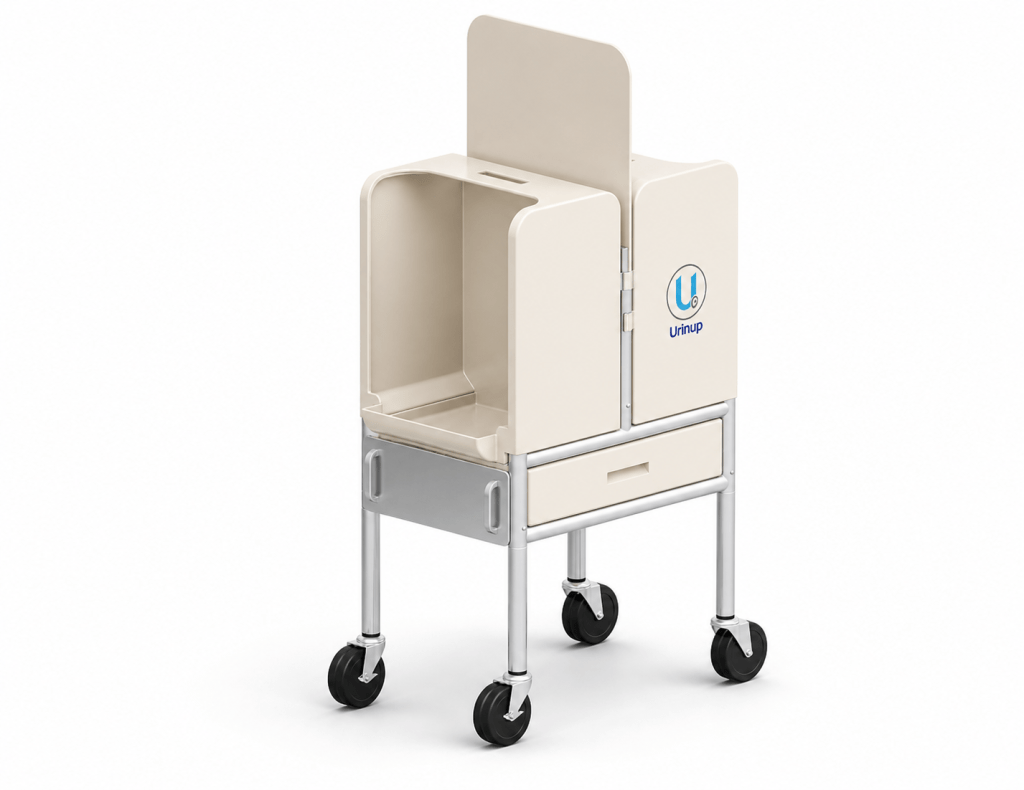
Urinup™ by CapaciFlow™ was designed for deployment in any environment – including the ones where nothing else is ready. No plumbing. No installation. No waiting for a service truck. One person can deploy a unit in under five minutes, anywhere there is a private space.
This post covers emergency response scenarios, active disaster zones, infrastructure failure, field medical operations, and rapid-onset crew deployments. For shelter-specific deployments covering evacuation centers, overnight facilities, and vulnerable population housing, see our companion post: Urinup™ in Shelter Deployments.
Why Sanitation Fails First in Emergency Response
Emergency response operations face a predictable sanitation breakdown within the first 24-48 hours of activation:
- Fixed restrooms become inaccessible due to structural damage, flooding, or power failure
- Porta-potty delivery is delayed by road closures, logistics disruptions, or insufficient lead time
- First responders and recovery crews operating in damaged zones have no access to functional facilities
- Medical surge sites treating injured or displaced persons need sanitation at the point of care
- Field command posts and staging areas activate faster than their support infrastructure
The result is a compounding operational problem – crews working in compromised conditions, medical teams managing unnecessary infection risk, and response effectiveness reduced by a logistics gap that should have been planned for.
How Urinup™ Deploys in Emergency Response
No infrastructure required In Tanked Mode, Urinup™ operates completely off-grid. No connection to plumbing, no water supply, no drain access needed. The sealed collector tank holds waste until a staff member empties it into any available toilet when one becomes accessible.
Five-minute deployment One person. Unlock the unit from storage. Roll it to the designated private space. Lock the wheels. Done. No tools. No assembly. No instruction manual required.
Any private space becomes a sanitation point Emergency response environments are improvised by definition — damaged buildings, tent structures, field command trailers, temporary medical facilities. Any space that offers a degree of privacy becomes a viable deployment location for a Urinup™ unit.
Users already know how to use it The design requires no training for users. The ergonomic urinal top and seated position are immediately intuitive. Response coordinators do not need to brief crews on how to operate the unit — they step in and use it naturally.
Repositionable as the operation evolves As response zones shift, as staging areas are reorganized, or as infrastructure comes back online section by section, Urinup™ units roll with the operation. No fixed commitment to a single location.
Emergency Response Scenarios
Active Disaster Zones – Structural Damage and Flooding
First responders and recovery crews operating in areas with structural damage or active flooding have no access to fixed restroom facilities. Urinup™ in Tanked Mode deploys to field staging areas, command posts, and crew rest zones immediately upon arrival — ahead of any other sanitation infrastructure.
Power Outages and Water Service Disruption
When water service is disrupted, fixed toilets stop functioning entirely. Urinup™ in Tanked Mode requires no water supply to operate. It continues functioning as long as crews can periodically empty the collector tank into any available receptacle – including portable waste containers if toilets are also unavailable.
Field Hospital and Medical Surge Settings
Field hospitals and medical surge facilities treating patients with mobility limitations need sanitation access at the point of care. The Single Gentleman or Double Ladies Edition positioned near patient areas eliminates the need to transport patients to distant restroom facilities for urination — reducing infection risk and staff workload simultaneously.
Wildfire Staging Areas and Command Posts
Wildfire response activates rapidly across large geographic areas with minimal permanent infrastructure. Urinup™ units stored in emergency management inventory deploy immediately to staging areas, crew base camps, and command posts – before any other facility support arrives.
Construction and Debris Clearance Crews
Active disaster recovery and reconstruction zones need sanitation for work crews in areas where infrastructure is still being restored. Urinup™ in Tanked Mode serves crews throughout the workday and empties into any available toilet at shift end, no service truck required.
Humanitarian Aid and Remote Relief Operations
For relief operations in areas with no sanitation infrastructure whatsoever, Urinup™ in Tanked Mode provides a portable, hygienic, dignity-preserving option that travels with the team and requires only periodic access to any waste disposal point.
Tanked Mode and Funnel Mode in Emergency Response
Tanked Mode – the default for emergency response Most emergency response deployments will use Tanked Mode because infrastructure is unavailable or unreliable. The sealed collector tank operates independently of any external connection. Crews empty it periodically as capacity requires.
Funnel Mode – as infrastructure stabilizes As response operations normalize – when some toilets come back online or drain access is established – units switch to Funnel Mode, connecting directly to available drains for continuous zero-storage operation. This eliminates the emptying cycle entirely and reduces crew workload as the situation improves.
For Emergency Managers – Inventory and Readiness
Storage and readiness Urinup™ units store compactly and require no special environmental conditions between deployments. They are ready to roll when activated with no maintenance cycle required between uses beyond standard cleaning.
Staff operation Emptying the collector tank requires no specialized training. One staff member rolls the unit to the nearest available toilet, opens the gravity drain valve, allows it to empty completely by gravity, closes the valve, and rolls the unit back. The entire process takes under two minutes with zero contact with waste.
Integration with existing emergency plans Urinup™ units inventory as part of your organization’s emergency preparedness kit alongside cots, food supplies, and medical equipment. When an activation is called, sanitation deployment is already planned and resourced.
Sanitation Is an Operational Requirement – Not an Afterthought
Every hour that a response crew operates without adequate sanitation access is an hour of reduced effectiveness, increased health risk, and compromised mission performance. Urinup™ closes that gap, not eventually, but immediately upon arrival.
For shelter-specific deployments covering evacuation centers, overnight facilities, elderly evacuees, and vulnerable population housing, see our companion post: Urinup™ in Shelter Deployments.
Partner with CapaciFlow™ for Emergency Preparedness
CapaciFlow™ works with emergency management agencies, relief organizations, healthcare systems, and municipal governments on emergency sanitation planning. Urinup™ units are available for reservation now in all three editions, Single Gentleman, Double Gentleman, and Double Ladies.
For bulk orders, emergency stockpile pricing, or deployment planning consultation, contact CapaciFlow™ directly.
Reserve your unit → urinup.com
 CapaciFlow™
Leave a comment