
What your bladder is quietly telling you – and why you should listen
The Problem Nobody Admits
You’ve done it. Everyone has.
Held it through the second half of a championship game because the restroom line was 40 people deep. Stayed in your seat through the final act because you didn’t want to miss a moment. Lay awake at 3 AM debating whether the trip to the bathroom was worth leaving the warmth of your bed.
For most people, occasional urine holding is uncomfortable but harmless. But for millions – the elderly, people with overactive bladders, event attendees, night shift workers, and anyone regularly forced to hold longer than their body wants – the cumulative impact is anything but trivial.
Science has a lot to say about what happens when holding urine becomes a habit. None of it is reassuring.
What Happens Inside Your Bladder When You Hold
The human bladder is designed to hold between 400 and 600 milliliters of urine comfortably, roughly the size of a large coffee cup. The first urge to urinate typically arrives when the bladder is about half full, around 200 to 300 milliliters.
When you ignore that signal, your bladder keeps filling. The detrusor muscle, the muscular wall of the bladder, stretches to accommodate the extra volume. In the short term, it handles this well. In the long term, repeated overstretching weakens the muscle, reducing its ability to contract fully and empty completely.
The result? Residual urine, urine left behind after voiding, which becomes a breeding ground for bacteria.
The Health Consequences: From Inconvenient to Serious
Urinary Tract Infections (UTIs) Stagnant urine is an ideal environment for bacterial growth. Chronic urine holding significantly increases UTI risk, particularly in women. Left untreated, UTIs can progress to kidney infections — a condition that in elderly or immunocompromised individuals can become life-threatening.
Bladder Muscle Damage Repeated overstretching of the detrusor muscle causes progressive weakening. Over time this leads to incomplete emptying, increased urgency, and in severe cases, urinary retention, the inability to void without medical intervention.
Kidney Stress When urine cannot drain properly due to a weakened or overfull bladder, back pressure builds in the ureters, the tubes connecting the kidneys to the bladder. Chronic back pressure damages kidney tissue over time, contributing to kidney disease.
Pelvic Floor Dysfunction Regularly overriding the urge to urinate retrains the pelvic floor muscles in ways that can lead to dysfunction, either inability to relax fully during voiding or, conversely, weakening that contributes to incontinence.
Sleep Disruption and Its Cascading Effects This one is underestimated. For elderly individuals and anyone regularly woken by bladder urgency, the cumulative sleep deprivation compounds quickly. Chronic sleep disruption is independently linked to cardiovascular disease, cognitive decline, metabolic disorders, and reduced immune function, all conditions associated with shortened life expectancy.
The Life Expectancy Connection
No single study draws a straight line from urine holding to reduced life expectancy. But the chain of causation is scientifically traceable:
Chronic urine holding → recurrent UTIs → kidney infections → progressive kidney disease → cardiovascular strain → premature mortality.
Separately: chronic urine holding → sleep disruption → cardiovascular disease, cognitive decline, metabolic dysfunction → premature mortality.
A 2016 study published in the American Journal of Kidney Diseases found that chronic kidney disease significantly increases all-cause mortality risk. The National Sleep Foundation has extensively documented that adults sleeping fewer than six hours per night face meaningfully higher risks of heart disease, stroke, and diabetes.
Neither of these conditions announces itself loudly. They build quietly, over years, in the bodies of people who simply didn’t have a convenient, dignified option when they needed one.
The Event Venue Problem
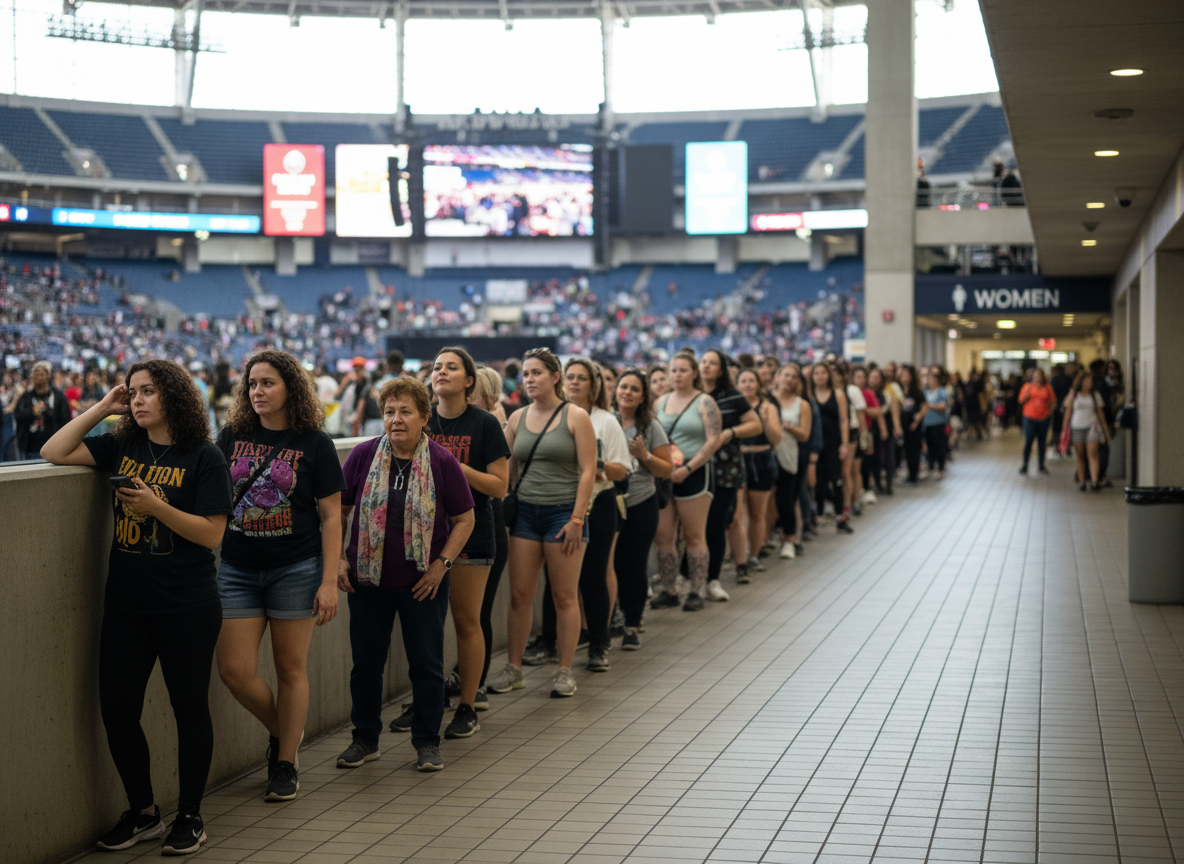
Large event attendees face a specific and underappreciated version of this problem.
At a stadium holding 70,000 people, restroom capacity is typically designed for average flow, not halftime surges. Studies of major sporting venues have documented wait times of 15 to 25 minutes during peak periods. Multiply that across an entire season, or a lifetime of event attendance, and the cumulative hours spent holding urine become significant.
Women face a disproportionate burden. Restroom lines at events consistently run two to three times longer for women than for men, a documented disparity rooted in fixture counts, stall usage time, and biological differences. The medical community has a term for the behavioral adaptation many women develop in response: defensive voiding, urinating preemptively to avoid being caught without access. Paradoxically, this habit trains the bladder to signal urgency at lower volumes, worsening urgency over time.
The Nighttime Problem
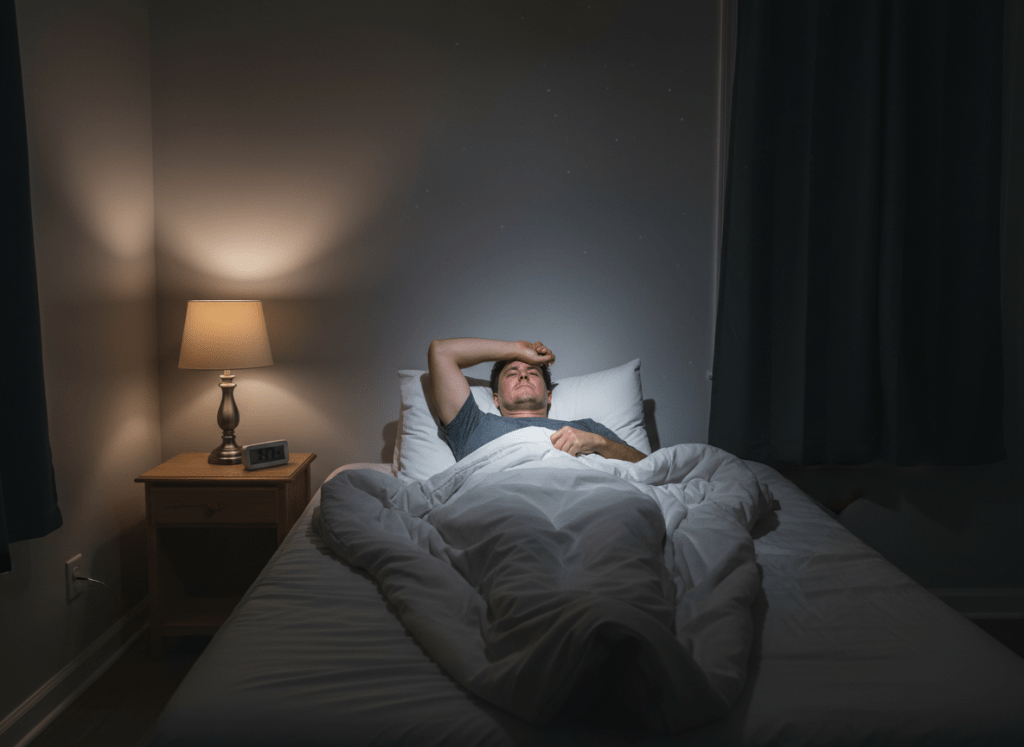
For elderly individuals and men with enlarged prostates, nocturia, the need to urinate one or more times per night, is one of the most common and most disruptive health issues of aging. The National Institute on Aging estimates that over 50% of adults over 60 experience nocturia regularly.
Each nighttime trip carries risks beyond sleep disruption. Falls during nighttime bathroom trips are one of the leading causes of injury-related hospitalization in adults over 65. The CDC estimates that falls cause over 36,000 deaths annually among older adults in the United States, and nighttime bathroom trips are a documented contributing factor.
The alternative, holding urine through the night rather than risk a fall, carries its own consequences, as detailed above.
There is no good option when access is the problem.
What the Body Actually Needs
Urologists generally recommend voiding every three to four hours during waking hours, never waiting beyond five to six hours under normal hydration. At night, the goal is uninterrupted sleep, with access available immediately when the urge arrives, without a journey across a dark house or a dangerous walk down a corridor.
The body doesn’t ask for much. It asks for access. Convenient, immediate, dignified access.
The Solution Hiding in Plain Sight
For event venues, the answer is additional urinal capacity, deployable without construction, available where lines form, ready when surges hit.
For homes, elderly users, and anyone navigating nocturia, the answer is bedside access, hygienic, discreet, dignified, and available in seconds.
Urinup™ was built for both. In funnel mode, it doubles toilet capacity instantly, no construction, no plumbing, no waiting. In portable mode, it wheels to any room, any bedside, any space where access matters and distance is the enemy.
Because the science is clear: access to urination when the body needs it isn’t a convenience. It’s a health imperative.
Your bladder has been asking. It’s time to answer.
 CapaciFlow™
Leave a comment